

Where can you actually play padel in Britain, and is it hard to pick up? Short answer: courts are now in most big towns and cities, and a complete beginner can rally within ten minutes. That is a big part of why padel tennis UK courts keep appearing on retail parks, in leisure centres and on the roofs of old car parks.
Padel is a racket sport played in doubles on a small enclosed court, roughly a third of the size of a tennis court. It started in Mexico in the late 1960s, took off in Spain and Argentina, and has been catching up in Britain over the last few years. The Lawn Tennis Association (LTA) has backed it as part of its wider racket sport offer, and the number of courts has grown quickly. I’d rather not quote you an exact court count, because it changes almost monthly. Check the LTA’s own padel pages for the current picture.
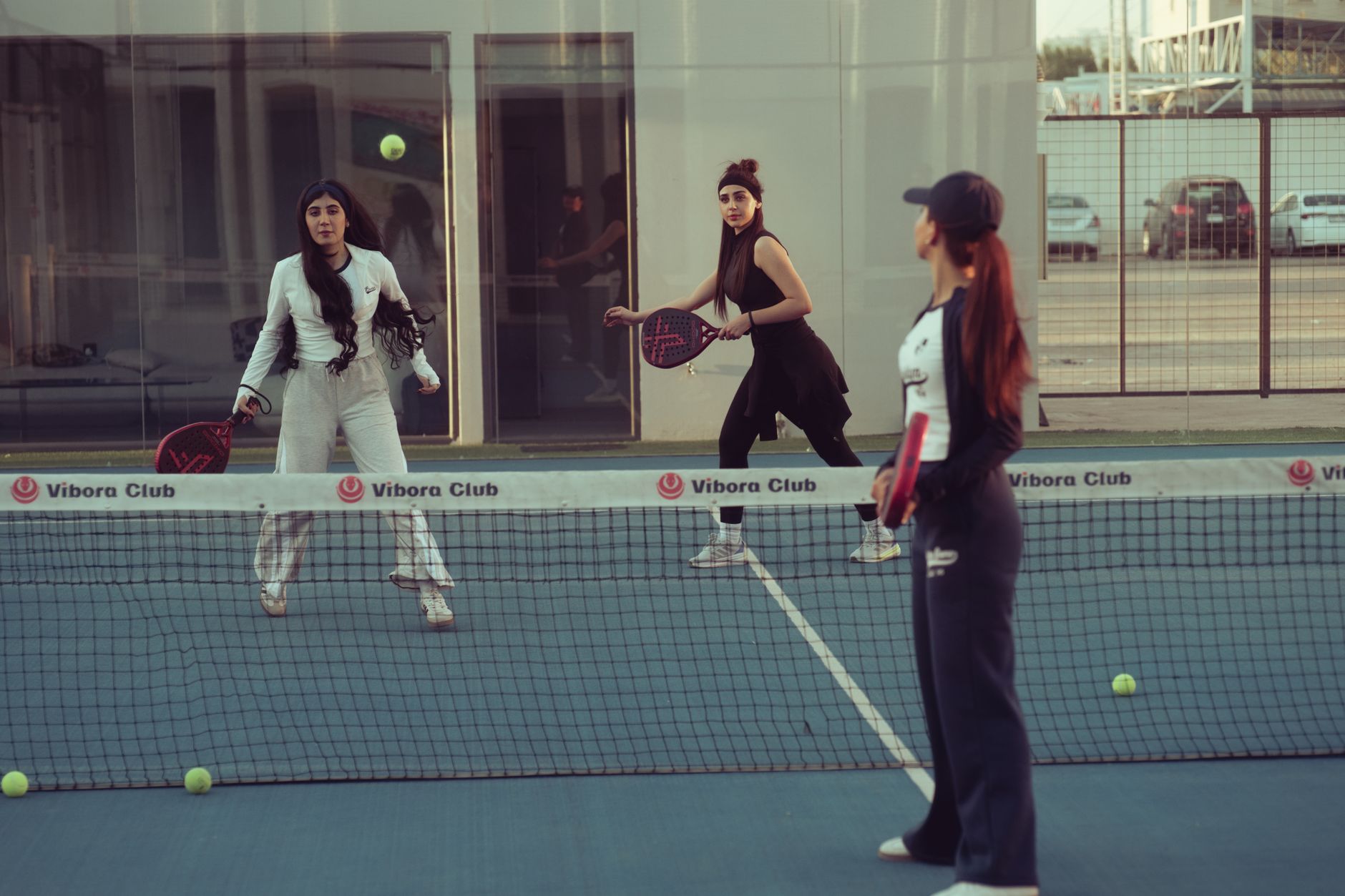
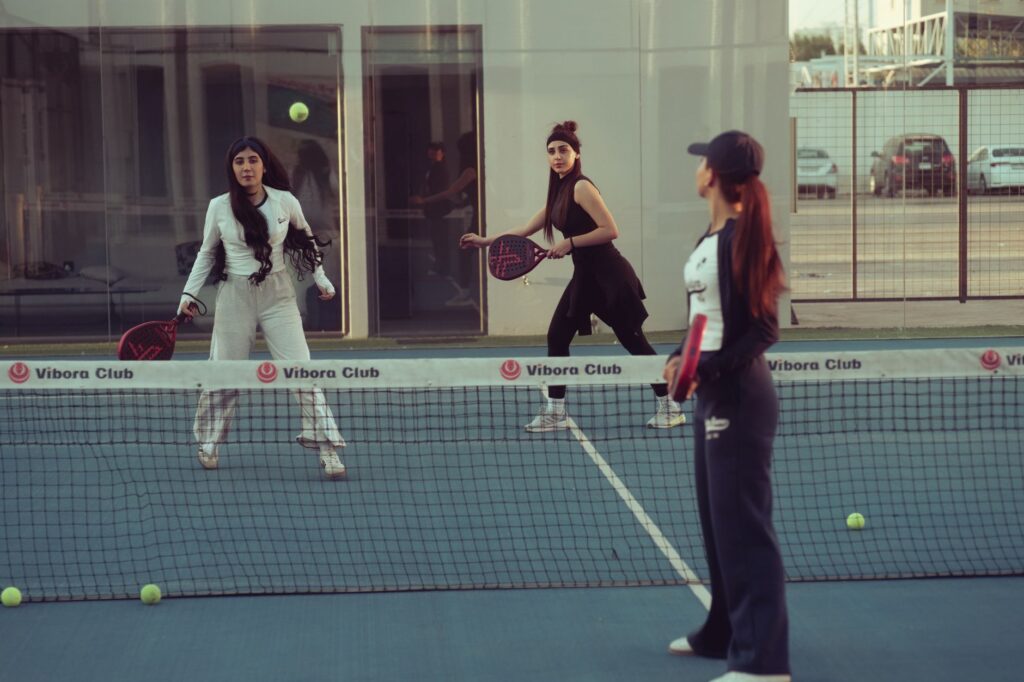
Why is padel growing so fast in Britain?
Padel is growing fast because it is easy to start, social by design and cheap to split four ways. You don’t need lessons, you don’t need to serve like a pro, and the glass walls keep the ball in play, so rallies last. Fun arrives on day one, which is rare in racket sports.
A few other things help:
- Doubles only. You always have three other people to chat to, laugh at and blame.
- Short sessions. Most courts are booked in 60 or 90 minute slots, which fits around work and the school run.
- Gentle on the body. The court is small and the underarm serve takes the strain off shoulders.
- Good workout in disguise. Constant lateral movement, short sprints and squats get the heart rate up without it feeling like training.
Football fans have noticed too. Five-a-side venues and sports clubs have found padel a sensible use of space, since you can fit several courts where one tennis court would sit.
What are the basic rules of padel?
Padel is scored like tennis (15, 30, 40, game) and played in doubles, but you serve underarm and the ball can bounce off the walls. Once you know five rules, you can play.
- Serve underarm. Bounce the ball once behind the service line and hit it below waist height, diagonally into the opposite service box.
- Let the ball bounce once. After the serve, the ball must bounce on the receiving side before you return it, apart from volleys.
- Walls are in play. After the ball bounces on your side you can let it hit your back or side wall and then play it. You cannot hit it over the wall of the opposing court directly without it bouncing first.
- Never hit the ball into the wall before the net. Your shot must cross the net first, then bounce in the opposing court before touching a wall or the fence.
- Same scoring as tennis. Win four points to take a game, six games to take a set, usually best of three sets. Many social players use a "golden point" at deuce to speed things up.
The racket is solid, with no strings and a perforated face, and the ball is similar to a tennis ball but with slightly less pressure. The court is 10 metres by 20 metres, surrounded by glass and mesh.
Is padel easier than tennis for beginners?
Yes, for most beginners padel is easier than tennis in the first few sessions. The smaller court, underarm serve, shorter racket and wall rebounds all keep the ball in play longer, so you spend more time hitting and less time fetching.
| Feature | Padel | Tennis |
|---|---|---|
| Format | Doubles | Singles or doubles |
| Serve | Underarm | Overarm |
| Court size | 10m x 20m, enclosed | Larger, open |
| Racket | Solid, no strings | Strung, longer |
| Walls in play | Yes | No |
| Typical learning curve | Quick to rally | Slower to sustain rallies |
That said, padel gets tactical fast. Good players use lobs, wall rebounds and net positioning, so the ceiling is high. If you already play tennis, you will have a head start on scoring and volleys, but you will need to unlearn big swings. Padel rewards control over power.
How do you find padel courts near you?
The quickest way to find a padel court near you is to search the LTA’s venue finder or use a booking app such as Playtomic, which lists courts, prices and open matches by postcode. Both let you filter by location and see availability.
Beyond that, try these:
- Local leisure centres and tennis clubs. Many have added courts, so check your council’s leisure site or your nearest club.
- Dedicated padel venues. Standalone sites have opened in and around cities such as London, Manchester, Birmingham and Glasgow, though availability varies, so check what is close to you.
- Social media and club pages. Local groups often post open matches where you can join a game without bringing three friends.
Prices differ by venue and time of day, with peak evening slots costing more. A court booking is normally shared between four players, so the cost per head is usually modest. Rackets can often be hired at the venue, so don’t buy kit until you know you like it.
What should you wear and bring?
Wear trainers with a grippy sole, ideally designed for padel or court sports, plus comfortable sports clothes. The surface is artificial turf with sand, so running shoes with deep treads can slide.
Bring water and a towel. Hire a racket first time. If you do buy one, a beginner racket with a round shape is more forgiving than a diamond-shaped power racket. Wrist leashes are normally recommended because rackets can fly off during a wild swing.
How to get started this week
Pick a venue near you, book an off-peak slot, and grab three friends or join an open match through a booking app. Many venues also run beginner sessions or coaching clinics. Go in expecting to laugh, miss a few walls and be hooked by the second set. For wider guidance on racket sports in Britain, see the Lawn Tennis Association.
Frequently Asked Questions
Is padel the same as tennis?
No. Padel is played in doubles on a smaller enclosed court with a solid, stringless racket and an underarm serve. Walls are part of the game. It shares tennis scoring, but feels quite different to play.
How much does it cost to play padel in the UK?
Prices vary by venue, location and time of day, with peak evening slots costing the most. Courts are booked per session and usually split between four players. Check your local venue or a booking app for current prices.
Do I need to buy a padel racket to start?
No. Most venues hire out rackets and sometimes balls, so you can try a session without spending on kit. If you carry on, a beginner round racket is a sensible first purchase.
Can you play padel on your own?
Not really, as padel is played in doubles. You can join open matches through booking apps or club groups, though, which pair you with other players at a similar level.
Is padel a good workout?
Yes. Constant movement, short sprints and quick changes of direction raise your heart rate, and the social side makes sessions fly by. It is lower impact than singles tennis, but still demanding if you play competitively.

Leave a Reply